

T - TEMPERATURE STABILITY
A FOCUS ON INSULATION.
Here is where we check our home to sense if it feels like it’s ‘wrapped in a blanket’,
of if we just can’t get warm inside it on cold days. Although we usually can’t see what is (or isn’t) inside our walls, we’ll know how insulated a home is by how often and quickly its temperature changes. Insulation in all building types is critical as it allows us to control and stabilise inside temperatures, (thermal regulation) even as the temperature outside changes.
Insulation is a material that slows or prevents the flow of heat and is a key part of any comfortable home, helping to keep heat inside the home in winter, and outside the home in summer. The most common type is ‘bulk (fluffy) insulation’ that uses air-pockets within a thick material to slow the flow of heat.
Insulation is passive, with no moving parts, so once it’s installed the benefits are un-ending. Optimum placement of insulation is based on the fact that hot air rises and that most warmth is lost in higher levels. Hence, the priority list for insulation is: ceiling/roof insulation as #1, wall insulation as #2 and then floors as #3. (In reality, the best first step is for the occupant to insulate themselves, with correct clothing.)
There are many types and ratings of insulation with the higher rating products being more effective. The rating system of insulation performance, how well it resists heat flow, is the ‘R-value’ (a measure of thermal resistance) and the higher the R value, the higher the level of insulation. Higher R-value insulation is an extremely effective option for achieving comfort and energy efficiency in a home.
The ‘total R value’ adds together the R value of the various components of a roof, ceiling, wall or floor, including the insulation. The type and R value of insulation that is best suited to your home will depend partly on your climate and construction type so it’s good to research options.

Image: It looks just like how it feels, like a large fluffy blanket. The best time to install insulation is during construction, though there are retro-fit options also.
Insulation Considerations.
The more insulation we use, and the higher its grade, the more comfortable we are in the home all year round. There is no on-going running cost for insulation so the ROI and payback periods are easy to calculate.
Be aware that a material’s ‘look’ can be deceiving, in terms of how they may insulate us.
For example, bricks are not a good insulator, dispute looking ‘solid’, whilst hay is an excellent insulator.
Ideas to make insulation work best are listed below, (with more tips also in this link):
Insulation & Draught Proofing | Energy Tips: Geelong, Victoria
- Seal gaps around ducts, pipes and holes in materials or joins, including all corner joins.
- Select high-rated insulation material that is durable and effective. Keep it dry.
- Insulation should fit snugly (between studs, joists, beams) without gaps or compression. Gaps from installation will dramatically reduce its effectiveness.
- Where possible, use sustainable insulation materials like wool or recycled glass.
- Ensure correct installation, in accordance with its design specs, the NCC (National Construction Code), and Aus Standards; to ensure correct thickness.
- Ensure the insulated home is also air-tight, with no gaps around windows and doors, to prevent air leaks and minimise draughts in the home.
Tip: ensure sufficient moisture control and ventilation to reduce condensation. Mould growth and poor air quality can result when homes are overly sealed up.)
Windows and Doors as Insulation.
Whilst not technically ‘insulation’, windows and doors are often a large part of a home’s ‘walls’ and so they need to control temperature also. Double (or triple) glazed windows should be designed in as they can control temperature almost as well as the insulation in the wall cavities does. Used together, good windows and insulated walls are a very effective temperature stability combination.
Reflective Insulation.
Commonly used in roofs, above ceilings, these (usually) foil sheets reflect heat back to where it came from. They mainly resist radiant heat flow because of their high reflectivity and ability to re-radiate heat. The thermal resistance of reflective insulation varies with the direction of heat flow through it and it’s often used in conjunction with bulk (fluffy) insulation.
Thermal Bridges.
Thermal ‘bridges’ are solid pathways (of materials) for heat and cold to move from the inside to outside (or vice versa) through the home’s building components. Aluminium window frames are a particular problem because of their high conductivity. Thermal bridging can be minimised though, such as by the use of ‘thermal breaks’ between metal frames and cladding, or by using a less heat-conductive materials like timber. It’s good to check this with a designer during the home’s design stage. A small piece of the right material used as a thermal break can make a big difference to temperature control.
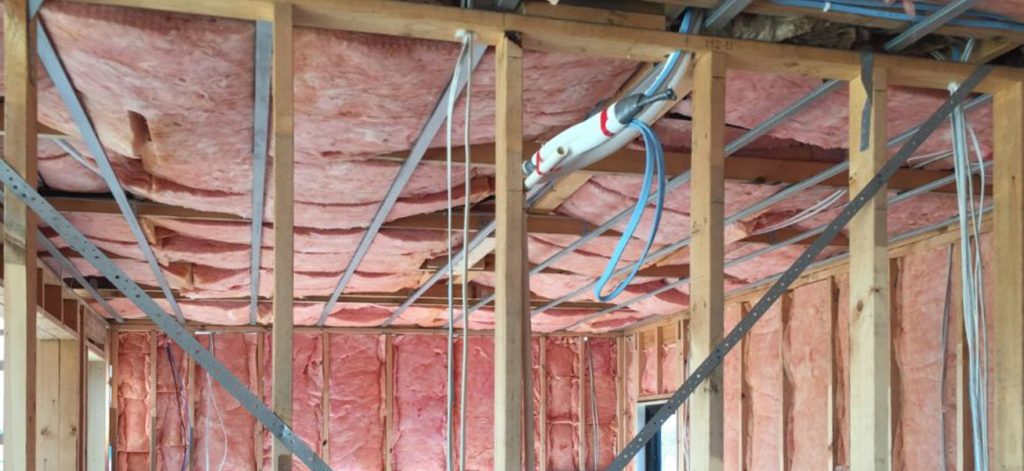
Image above: Installing high grade insulation brings into the home a wonderful level of passive temperature control. It sits quietly, for decades, doing its thing without runing costs or fuss and adds great comfort to a home.
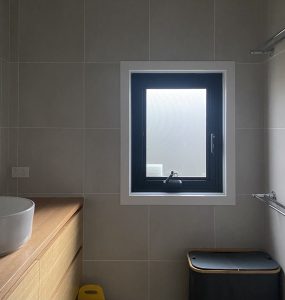
Image below: Double-Glazed (DG) windows. Single-Glaze windows, the most common type of windows till recently, are generally known as a ‘hole in the wall’ in terms of temperature control. DG windows however, use a vacuum seal between their 2 panes of glass to greatly help insulate a home.


Stay connected! Follow us on blog or socials for the latest updates, education and much more!
Quick Links
Get In Touch
© All Rights Reserved.