

I - INTERNAL AIRFLOW
Ventilation, Airtightness, Cross-Ventilation, IAQ and Draft-Proofing.
Ventilation is intentionally introducing (fresher) outdoor air into a building. Homes require controlled ventilation to maintain good (fresh) indoor air quality. It increases oxygen levels and dilutes and displaces carbon dioxide and airborne pollutants. It’s also commonly used to remove excess internal heat.
Ventilation methods can be either natural (via windows and doors) or mechanical (such as fans). Ventilation is used to increase thermal comfort and reduce humidity in a home. Having a healthy home that also has good thermal performance requires both reliable ventilation and good airtightness.
Airtightness is avoiding the unintended introduction of outdoor air into a building or the loss of air to the outside (for example, through poorly sealed windows). Sealing your home is one of the simplest and best upgrades you can make to increase your comfort and reduce energy costs, though it needs to be carefully balanced with airtightness.
Careful design will be needed to ensure that the risk of condensation does not increase when improving airtightness. An airtight home without adequate ventilation may lead to condensation, mould and high internal levels of carbon dioxide. We seek airtightness for thermal comfort and energy efficiency, but not so tight that it compromises indoor air quality. If unsure, it’s best to consult a qualified building professional on how best to achieve this balance in a particular home.
Cross-Ventilation.
This is the principle of allowing cooler air to ‘cross’ through a building, usually to lower a home’s air temperature and bring in fresh air, naturally. Cross-ventilation pushes out hot air and allows cool air-flow through from end to end, as a natural heat-exchange. Cross-flow can be designed into a building via openable (screened) windows (or doors) at opposite ends of a building, with a clear path for the air to flow.
Natural breezes can be utilised to allow cooler fresh air into a building.
How we design and manage the openings and the airflow path (including internal room/wall layout) will greatly affect the efficiency of the internal airflow. Natural ventilation is perhaps the key element of a building’s temperature management in hotter climates.
The essential aspect of cross-ventilation is to have two openings (usually 2 windows/ doors) that are positioned at opposite ends of a home. A direct (uninterrupted) line (or multiple lines) between them allows quick airflow, which gives a fast internal/external air exchange. This is especially useful for times such as when a ‘cool-change’ has come through the region and when we wish to cool a home quickly.
Cross ventilation for summer cooling, when well planned, is a time-honoured no-cost and effective way to manage summer heat.
We should plan the size and location of the openings, the openness of the home’s airflow passage and initially also, check the external/ site conditions to know where the air comes into the site from. Most sites have a limited range of directions from which beneficial cooling breezes blow in from, these should be identified before home design decisions are made.
Cleverly, breezes can also be deflected or diverted, so perfect orientation to breeze direction is less important than the actual design of windows and openings for collection and direction of breezes into and through the home.
Within a home there are also gentle breezes, as for example, warmer air rises up open stairwells. Ceiling fans can circulate warm air evenly in rooms and push it down from the ceiling to living areas. Using this knowledge when designing a house creates better living conditions.
Indoor Air Quality (IAQ)
When we are aware of the condition of air in our home, we can help to improve its IAQ.
IAQ aspects to consider are:
1. Paints and finishes: check what chemicals are in them. Check for harmful VOCs.
2. Candles: do the ones we use contain harmful paraffin oil? Or are they of natural materials?
3. Are our daily actions creating mould? Do we open the bathroom window when we shower? or use fans to extract moisture?
4. Heating/cooling: are we causing excess heat? such as from long cooking times on hot days.
5. Do we feel comfortable burning gas in our kitchen?
When we check what affects the quality of the air in our home we can make decisions that will improve our health and comfort.
Condensation.
Condensation occurs when humid air meets a cooler surface and can cause damp, mould and even rot. The risk of condensation in a home depends on the climate, how your home is built and how occupants operate within the building. To reduce the risk of condensation, use expert advice to choose and install your building membrane and insulation, then monitor your in-home actions to avoid creating and holding excess moisture inside, especially from bathroom use. A home without excess condensation is a healthier home
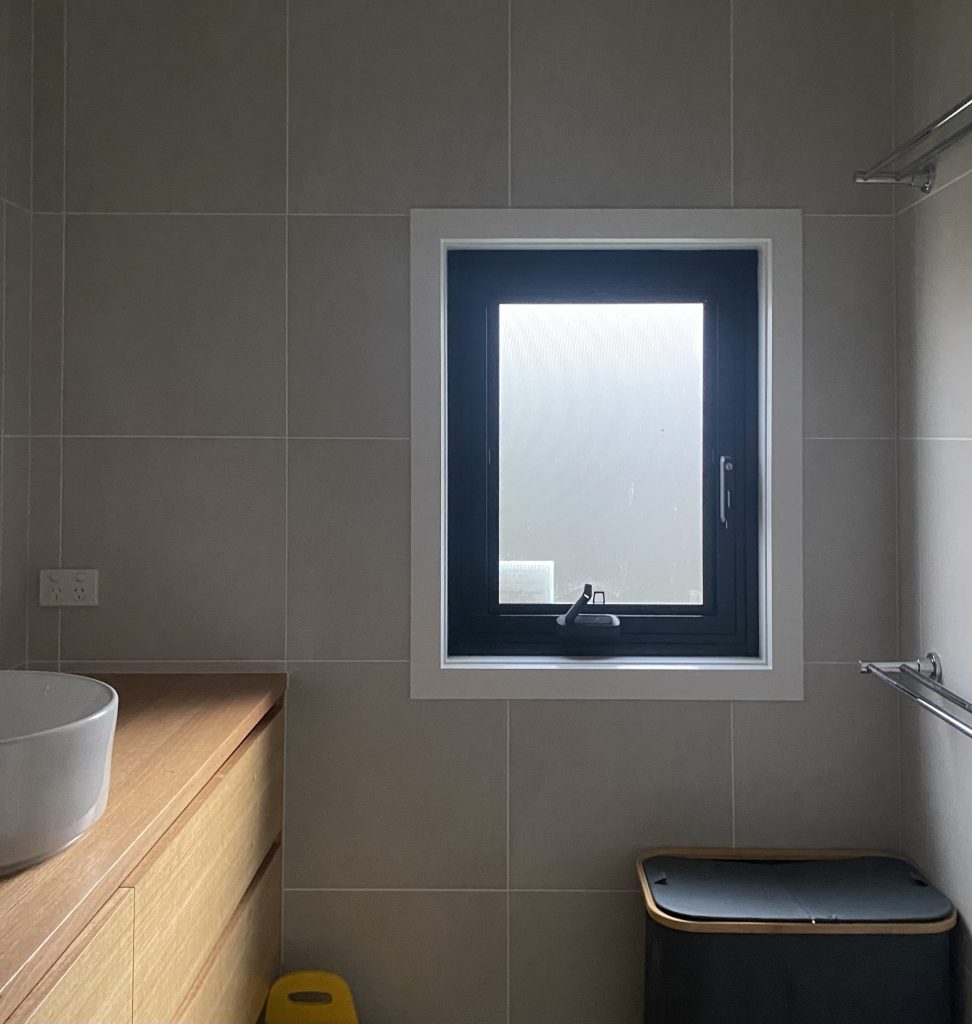
Image: window choice affects not only light, but also the quality of ventilation, gap sealing, airtightness and air cross-flow. An openable window (with fly-wire) is an excellent source of natural ventilation and also helps to control condensation.
Gap sealing/ Draft Proofing.
Related both to insulation and this topic of ventilation, the amount of gaps in a home needs to be addressed as an early step in making a home more sustainable. To gain control of a home’s temperature (via ventilation and insulation), first we must ensure there are no unwanted gaps in the structure of a home as gaps will undo all the positive measures we take.
Most homes don’t have one large gap (hole), they have many small gaps that all add up to one large draughty ‘hole in the wall’. Sealing unwanted gaps will stop uncontrolled heat-transfer and unwanted breezes. This is a simple step, yet a critical step, as gap-sealing is the first step to taking control of our indoor environment. Thankfully most drafts can be quite easy to detect, either by noticing air movement or from a change in temperature. Many of them are easy DIY projects to rectify also.
See the image below for visual details.
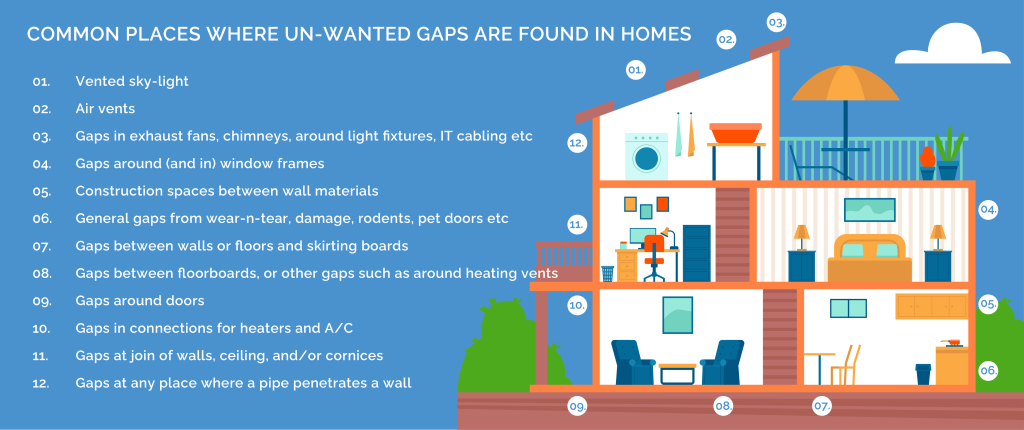
Sealing a home well is a first and key step in gaining control of a home’s internal air conditions and temperature.


Stay connected! Follow us on our blog or socials for the latest updates, education and much more!
Quick Links
Get In Touch
© All Rights Reserved.