

C - COMPONENTS + MATERIALS
Whether designing a new or retro-fitting an existing building, there are dozens of material and component decisions/ choices to be made and each has a level of environmental impact to consider. Components + Materials (C+M) have a significant impact on a home’s performance, durability and energy use. Careful analysis and selection of C+M improves a building’s comfort and cost efficiency, whilst also reducing its life-cycle environmental impact.
Generally also, we should think about reducing, reusing, renewing and recycling our materials as much as we can.
If using timber, for example, there are over 10 choices to be made, perhaps a surprisingly high number just for this one of the many building materials we may use. Timber use choices include: local vs imported, new or recycled, renewable/ plantation or old-forest, use of off-cuts, to cover or not cover the timber, selecting solid timber or engineered or veneer, to paint or oil or leave raw, and more.
Greener choices.
C+M decisions are also made with concrete, windows, carpet, steel, roofing, finishes, appliances and all other materials and processes used in procurement of a building.
Greener choices are available to us in the amount of energy used in procurement (embodied energy), in travel miles taken (transport energy), toxins & finishes, the quantity used, reduce/reuse/recycle options, processing types, waste, packaging, renewability and also material placement. Each time we make a more sustainable C+M choice, our home is more sustainable.
Examples of components to consider are windows and roof trusses, where, for example, we can choose double glazed (DG) windows, instead of single glazed. Another choice is a flat roof rather than a pitched roof, to greatly reduce our material usage and cost.
We can always search-out for the better/ best option, such as the use of sustainable and eco-friendly building materials (reclaimed wood, recycled metal, wool insulation, etc), and avoid the worst, such as high VOC (volatile organic compound) paints or materials with high travel miles or that result from toxic mining practices.
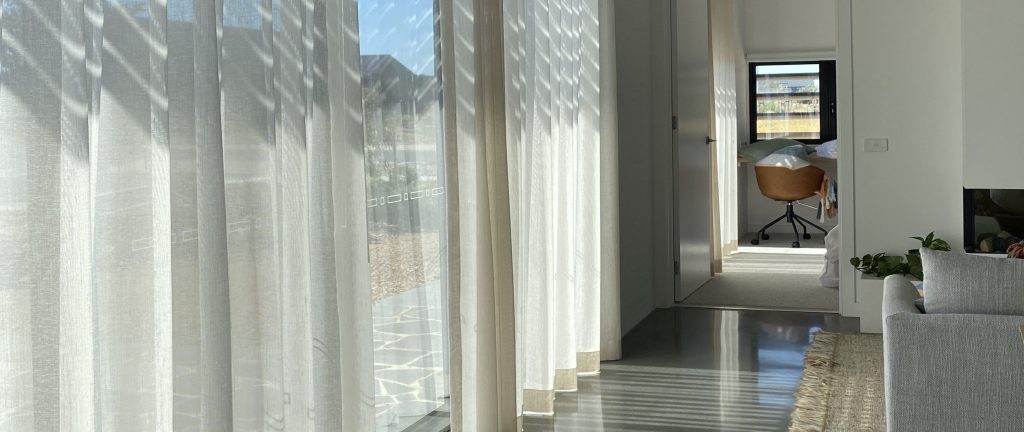
Image: Materials in action. The winter sun comes in under the shade and warms the slab. The DG windows hold the heat inside the house and the curtains/ blinds can be moved to adjust the room temperature by a few degrees up or down.
We should always consider the longevity and durability of materials selected, to reduce the need for early replacements. We can also make considered decisions around our material quantity and placement. We can, for example, choose to design/ build smaller bedrooms and buy ‘double’ beds for them, rather than build 3m2 more for each room to hold a Queen size bed.
We can choose to increase our use of natural products such as locally sourced timber or rammed-earth, both being sustainable building materials that have been in use for thousands of years. Equally, we can lower our use of harmful procurement practices such as the dredging of rivers for sand to use in concrete production, or can stop air-freighting tiles from off-shore.
As well as assessing materials in their final product form, we also need to assess their effect on the environment though all their procurement phases. Examples:
- Mining/extraction/preparing. Possible habitat destruction from mining toxins.
- Manufacturing/ production/ processing. Avoid the use of coal-powered energy.
- Construction. High-emissions concrete may be subbed with cross-laminated timber.
- In-use. Additional heating needs arise from installing just single-glazed windows.
- Demolition/ dumping. Choose to disassemble and re-use, rather than demolish.
There are always options, so we have many chances to choose the more sustainable action.

Image: Reverse brick veneer (seen here as the white brick wall) is a great way to help stablise a home’s temperature. It’s similar to the usual style of modern house wall but it’s just reversed and gives great comfort benefits.
Glazing.
This discussion covers: glass and its frames in windows, external doors and skylights.
A key component (material) of modern homes is windows, a highly desirable feature, though their use, or misuse, also has a significant effect on the thermal performance (comfort) of a home.
We wish for our windows to retain heat (indoors) in winter and to retain cool internal air in summer though up to 40% of a home’s heat/energy can be lost (in cool months) through windows and up to 87% of unwanted heat is gained through windows (in hotter months)*.
Improving the thermal performance of glazing will increase a home’s comfort and reduce energy consumption, therefore lowering costs and greenhouse gas emissions.
(* Reference: the Conversation (AU): 7/9/2023. T Moore, L de Kleyn, T Simko).
Conduction in Glazing.
This is how readily a material conducts heat and this is known as the U value.
The ‘U value for windows’ describes the conduction of the whole window (glass and frame together) and is the measure of how much heat is transferred through it. The lower the U value the greater a window’s resistance to heat flow and the better its insulating value is. We can use this knowledge when choosing windows for our home.
The impact of glazing on the thermal performance (temperature) of a building is complex. It involves the interaction of the following factors and so a separate individual (unique) assessment should be made for every home.
- Climatic conditions in your location: temperature, humidity, sun levels, and wind.
- Building design: the orientation, form, and layout of the building.
- Building materials: the amount of thermal mass and insulation.
- The size and location of windows and shading.
- Thermal properties (the quality) of the glazing and doors.
When glazing is done correctly, the performance and comfort of the home will be greatly improved.
Tip: include fly-wire mesh screening on windows and doors, so insects are kept out when enjoying natural cooling via open glazing.
The implementation of good solar passive design principles can be more challenging on some sites such as if neighbours are blocking natural sunlight from your windows. In these cases, choosing glazing with improved thermal performance can compensate for aspects of the building design that are detrimental to its thermal performance, such as limited winter sun exposure. In the more complex site situations we need to consider all the variables more carefully, (size, type, opening-style, quality, etc) before making a decision.
COMPONENTS + MATERIALS. Further Considerations.
Looking again at the topic of materials and how they come to be in a home, it’s important to keep in mind the many hidden aspects of materials which are not at front-of-mind but are signifiant in their impact on the level of sustainability of a home.
For example, below is a list of damages caused to the environment from mining/ harvesting of materials and the considerations we should make with them. The level of damage caused is in relation to the quantity of materials used. More materials = more damage.
The more materials we use the more of everything we are responsiable for, including these aspects:
- Are the sludge and/or extraction chemicals correctly and legally handled?
- Is the solid, gas and liquid waste made during the mining and production processes correctly managed?
- How much (embodied) energy is used to procure the material/ component?
Also, is it green renewable energy? - Is there excessive energy consumed during transportation to the site of usage.
Are the materials transported across the globe? - How much energy is consumed on-site for erection or assembling.
What type of energy is it? Renewable? - Is there excessive packaging waste from each processing step?
- Does this material/component cause further environmental harm once it’s in the building? For example, does it emit toxic odours?
- Has the end of the life-cycle of the material been considered and prepared for?
For example, the recyclability (and or adaptive reuse potential of) the demolished/ dissembled material or whole structure.
These are all things we may easily turn a blind eye to, though we can also make positive change through investigating our sourcing and making many better informed decisions.


Stay connected! Follow us on our blog or socials for the latest updates, education and much more!
Quick Links
Get In Touch
© All Rights Reserved.