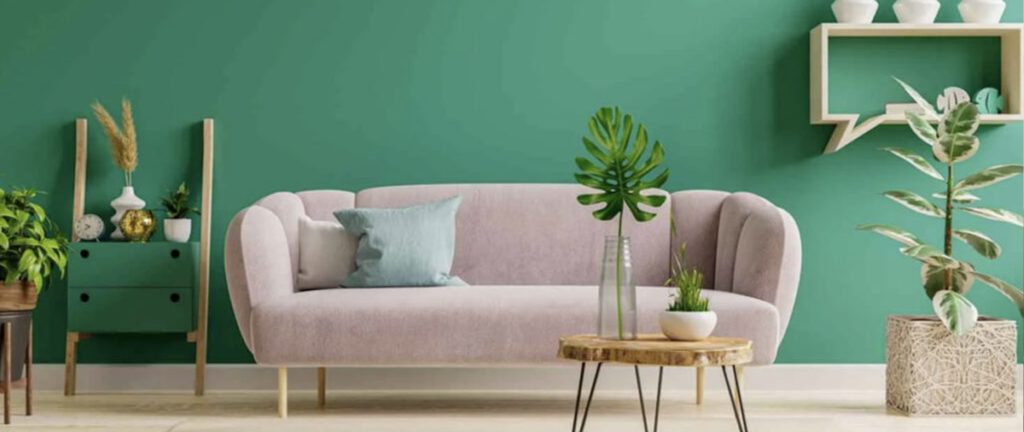
Image: The 7 TACTICS principles can be applied across a whole home, and then for each room we check to see which of the principles offer the best improvements.
Follow These 7 Principles To Reach Your Sustainable Home Goals. TACTICS is a user-friendly learning module that helps to understand your home from a sustainability perspective. When using this knowledge about the design, orientation, function, materials and construction of homes, you will bring more natural winter warmth and light into your home, will enjoy more natural cooling, and use less mechanical heating & cooling.
How to do a CESH TACTICS Home Assessment.
The First Step:
Reading
Reading each of the 7 principles of TACTICS listed below gives an initial explanation that will guide you and explain how to assess and improve your home.
After becoming familiar with these principles, the next step is going to the ‘Self-Assessment’ page and then to explore your home with a new view point.
If any aspect of Sustainable Home Design is unclear, there are detailed explanations in ‘The 7 Principles’ page.
The Second Step: Exploring Your Home
The exploring and assessment step can be done solo, or with someone whom you may wish to discuss it with, (a 2nd pair of eyes!) You’ll re-explore your home with new ideas about what you see, don’t see, how things work, where the sun is, how the air moves, and much more. If you are making notes, you can use the 7 principles as topic guides and record what you learn and discover for each section. A self-assessment questionaire (form) is available to download (or print) on the ‘Self-Assessment’ page and will help you identify opportunities for change and improvement.
Self assessment can be done at any time and at your own pace
The 7 Principles Of
TACTICS is about home owner and occupant decision making and about making change. It’s re-thinking what you do. The ‘comfort science’ of TACTICS can improve our habits, improve the sustainability of our decisions and so we can improve our homes. Once you evaluate and make changes, you’ll have a significant effect on the sustainability of your life as you are at the centre of your home and you are the catalyst for change.
Temperature Stability comes primarily from INSULATION. Insulation allows us to control and maintain indoor temperatures, even as the temperature outside changes. Insulation holds heat inside the home in winter, and keeps the home cooler in summer. Its benefits last for decades. With no on-going running cost for insulation, the ROI figures for insulation are very positive.
Acclimatisation. Homes work best when designed to suit their climate. This begins with ORIENTATION of the home in relation to the sun, with consideration of the sun’s daily movement across the sky and the seasonal changes of its path. In Southern Australia, we orientate homes to the solar North and capture and block the sun as needed. Acclimatisation also involves INTERNAL ROOM PLACEMENT (IRP), a design approach for how to best lay-out a building’s floor-plan in terms of room comfort, light, energy use and sustainability.
Components (like windows) and Materials (like concrete). C+Ms. C+Ms have a long-term impact on a home’s embodied energy, performance, durability, and energy use. Careful selection of Components + Materials improves a building’s comfort and cost efficiency, whilst also reducing its environmental impact. Good change comes when we make considered decisions around our C+M types, source,quantity and placement.
Thermal Mass. Consideration of Thermal Mass (T-M) during home design can significantly increase its comfort of and reduce its energy use. Designing around T-M is the understanding of different materials’ levels of absorbing and holding heat and how we can manage that to our advantage, so that a home’s base temperature can passively be comfortable all year round.
Internal Airflow. This topic includes gap-sealing, air-tightness, ventilation, cross-ventilation and indoor air quality (IAQ). Healthy homes require both good ventilation (fresh air) and airtightness (sealing) to ensure we stay in control of air quality and air flow. Sealing gaps in your home is one of the best methods of increasing your comfort and reducing energy costs. Cross-Ventilation is the design principle of allowing fresh cooler air to ‘cross’ through a building and cool a home via a natural internal heat-exchange process.
CostEfficiency, which is alsoEnergy Efficiency. Efficient Energy use is a key element of the broader sustainability concept. Being energy efficient (EE) means using greener and also the least amount of (or no) power to heat, cool, cook, wash and do other things that need energy. Changes in what we do are positively impactful as our behaviours, our daily habits and longer-term decisions all play a big role in bettering our energy use.
Smaller. ‘Less is more… sustainable’. Being sustainable is largely about ‘less of things’, such as ‘going smaller‘ and lowering our consumption of materials and energy. ‘Less is more’…sustainable. Smaller homes, less material consumption and waste, lower energy use and smarter design are all great ways to reduce our carbon footprint and energy emmissions. We’ve become addicted to ‘more’ with all we do, though we can make positive changes if we adjust to do things ‘less’.
CESH TACTICS
If you are ready for improvements, the self-assessment modules are ready for you now, or you could contact us for a group talk or site visit. For any queries, simply fill out the form on the contact page or email us.
Email: info@cesh.com.au TACTICS Information and Home Self-Assessment: Free to do/ use at any time. CESH TACTICS: Melbourne on-site talks and assessments: available through request.
CESH ABN: 63 247 066 902
Stay connected! Follow us on our blog or socials for the latest updates, education and much more!